Finding the perfect smart thermostat for electric baseboard heating can feel like hunting for a needle in a haystack—especially when you’re juggling comfort, energy bills, and the desire for seamless home automation.
The right thermostat not only learns your schedule and trims wasted electricity, but it also integrates smoothly with your existing baseboard units, preventing costly mismatches and ensuring every room stays just the right temperature.
In this post, we’ve sifted through countless models, tested their compatibility, and ranked the top ten smart thermostats that excel with electric baseboard systems. Whether you’re a tech‑savvy homeowner or a first‑time buyer, our curated list will guide you to a smarter, cozier home.
Table could not be displayed.10 Best Smart Thermostats for Electric Baseboard Heat
We’ve researched and tested each model to bring you the most reliable, energy‑saving thermostats perfectly suited for electric baseboard heating.
10. Honeywell Home RLV4305A1000 Programmable Thermostat

Honeywell’s RLV4305A1000 is a digital 5‑2 day programmable thermostat built specifically for 240 V electric baseboard, convector, fan‑forced and radiant‑ceiling heaters.
Its TRIAC switching delivers silent, precise temperature control with an industry‑leading accuracy of ± 0.27 °F, eliminating the typical swings you feel with conventional line‑voltage thermostats.
The intuitive back‑lit display and front‑panel instructions make programming the four daily periods—Wake, Leave, Arrive, Sleep—quick and hassle‑free.
A 2‑wire non‑polarized connection speeds up installation, while the temporary bypass lets you override the schedule without losing your programmed settings.
Rated for a maximum load of 3,500 W (14.6 A) and a minimum of 2 A, this unit is perfect for dedicated electric heating zones, but it’s not compatible with low‑resistance loads, inductive loads, or central heating systems.
| Specification | Detail |
|---|---|
| Program Type | 5‑2 day (weekday/weekend) |
| Program Periods | 4 per day (Wake, Leave, Arrive, Sleep) |
| Accuracy | ± 0.27 °F |
| Power Rating | 3,500 W @ 240 V (14.6 A) – Min 2 A |
| Connection | 2‑wire non‑polarized |
| Display | Back‑lit LCD |
| Switching | TRIAC (silent) |
| Bypass | Temporary temperature override |
| Compatible Heaters | Electric baseboard, convector, fan‑forced, radiant ceiling |
Best For – Precise, silent control of single‑zone electric heating in homes or apartments.
Pros
- Ultra‑accurate temperature control (± 0.27 °F) reduces drafts and hot spots.
- Silent TRIAC operation eliminates the click‑click noise of traditional line‑voltage thermostats.
- Easy 5‑2 day programming with clear back‑lit display and quick‑start front‑panel guide.
Cons
- Not suitable for low‑resistance (<0.83 A) or inductive loads such as contactor‑driven systems.
- Limited to 240 V line‑voltage heating; cannot be used with central furnace setups.
9. Cadet BTF2W Baseboard Thermostat

The Cadet F Series Double‑Pole Built‑In Baseboard Thermostat (Model BTF2W) delivers precise temperature control for electric baseboard heating. Its large, easy‑turn twist dial lets you set comfort between 45 °F and 80 °F (7 °C‑27 °C) with a single, smooth motion.
Designed exclusively for Cadet F‑Series heaters, the thermostat mounts directly to either end of the unit, eliminating extra wiring and keeping the installation tidy.
The compact white housing blends seamlessly with the heater’s finish, while the single‑pole (2‑wire) low‑setting operation provides reliable, low‑profile performance.
Whether you’re upgrading an existing system or finishing a new space, this thermostat offers a straightforward, space‑saving solution that maintains consistent warmth without the clutter of external controls.
| Key Spec | Detail |
|---|---|
| Model | BTF2W |
| Part Number | 08734 |
| Voltage | 120/208/240 V |
| Amperage | 22 A |
| Temperature Range | 45 °F – 80 °F (7 °C – 27 °C) |
| Compatibility | Cadet F‑Series electric baseboard heaters |
| Mounting Position | Either end of heater |
| Finish | White, compact design |
| Wiring | Single‑pole (2‑wire) low setting |
Best For – Ideal for homeowners seeking a clean, easy‑install thermostat that matches Cadet electric baseboard heaters.
Pros
- Simple twist‑dial adjustment for quick temperature changes.
- Mounts directly to the heater, removing the need for extra wiring.
- White, low‑profile design blends with the heater for a seamless look.
Cons
- Works only with Cadet F‑Series baseboard heaters (not universal).
- Single‑pole low setting may limit advanced programming options.
8. YeloDeer 240V Manual Thermostat

Our YeloDeer 240 V Only 4‑Wire Manual Electric Baseboard Heater Thermostat blends modern style with reliable performance. The crisp white housing sits flush against the wall, while the oversized, smoothly‑rotating knob makes temperature changes effortless for every family member.
Powered by an electronic sensor, it delivers far tighter temperature control than a traditional mechanical thermostat, keeping your 240 V, up‑to‑4800 W heating system running at the exact comfort point you set.
The thermostat’s wide operating range of 40 °F – 80 °F (4.4 °C – 26.7 °C) lets you fine‑tune warmth throughout the seasons, and the clear indicator lights instantly tell you whether the unit is connected and actively heating.
Installation is a breeze with step‑by‑step instructions and universal compatibility with baseboard, connector‑type, and fan‑forced electric heaters—perfect for a quick upgrade or a fresh build.
| Spec | Detail |
|---|---|
| Voltage | 240 V (4‑wire) |
| Maximum Power | 4800 W |
| Temperature Range | 40 °F – 80 °F (4.4 °C – 26.7 °C) |
| Control Type | Manual, non‑programmable |
| Color | White |
| Installation | Wire‑in, includes instructions |
Best For – Homeowners who want a sleek, easy‑to‑use thermostat for a 240 V electric baseboard heater.
Pros
- Stylish, low‑profile design that blends with any décor.
- Electronic accuracy provides tighter temperature control than mechanical units.
- Broad temperature range offers flexible comfort settings.
Cons
- Manual‑only operation; no scheduling or smart‑home integration.
- Limited to 240 V systems; not suitable for 120 V setups.
7. Mysa Smart In-Floor Thermostat
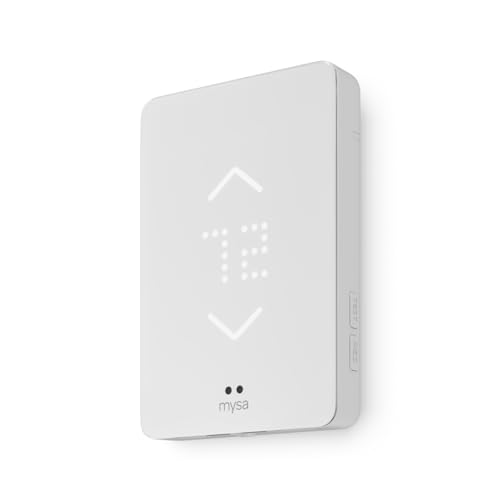
Mysa’s Smart Thermostat transforms a standard 120‑240 V electric in‑floor heating system into a responsive, energy‑saving comfort hub.
The sleek, wall‑mounted unit features a built‑in Class A GFCI for added safety, and it talks to your home Wi‑Fi network so you can set schedules, adjust temperatures, and monitor usage from anywhere.
No subscription fees are required—just download the free Mysa app or use voice commands with Alexa, Google Assistant, or Siri. Installation is straightforward: a single line‑level connection and the intuitive app guide get you up and running in minutes, without the need for a dedicated hub.
Whether you’re upgrading a new build or retrofitting an existing space, Mysa delivers precise control, reduces electricity waste, and keeps every room at the perfect warmth—all while blending seamlessly into modern décor.
| Spec | Detail |
|---|---|
| Voltage | 120 V – 240 V (high/line) |
| Power Rating | Up to 4 kW per zone |
| Safety | Built‑in Class A GFCI |
| Connectivity | Wi‑Fi 2.4 GHz |
| Control Options | App, Alexa, Google Assistant, Siri |
| Compatibility | Electric in‑floor heating only (no hydronic) |
| Subscription | None |
| Installation | Line‑level, DIY‑friendly |
| Dimensions | 4.5 × 2.5 × 1 in. |
| Warranty | 3 years limited |
Best For – Homeowners with electric in‑floor heating who want effortless, subscription‑free smart control.
Pros
- Integrated Class A GFCI provides top‑tier safety without extra hardware.
- Voice‑assistant compatibility lets you adjust heat hands‑free.
- No ongoing subscription keeps long‑term costs low.
Cons
- Not compatible with hydronic or water‑based heating systems.
- Requires a 2.4 GHz Wi‑Fi network; may need a stronger router for large homes.
6. KALOR TECH Smart Thermostat for Electric Baseboard Heaters

The KALOR TECH Wi‑Fi Smart Thermostat transforms a standard electric baseboard heater into a fully connected climate hub.
Designed exclusively for 120‑240 V systems, the unit slides into a standard American or Canadian electrical box using the included proprietary wall plate, eliminating the need for custom mounting.
Its bright Fahrenheit LCD displays the current temperature, target setting, time, and Wi‑Fi status at a glance.
Through the Smart Life or Tuya app you can program schedules, adjust settings remotely, or keep a safety “freeze‑guard” temperature on when you’re away—perfect for rentals, vacation homes, or any property that needs reliable heat management.
Voice control via Alexa or Google Assistant lets you change the heat without lifting a finger, while intelligent scheduling helps trim energy bills.
Quick‑install hardware (screws, pigtail wires, wall plate) gets you up and running in minutes, and the 2.4 GHz Wi‑Fi requirement ensures a stable connection for seamless operation.
| Specification | Detail |
|---|---|
| Voltage | 120‑240 V (no 24 V or single‑pole) |
| Display | 4‑digit Fahrenheit LCD |
| Wi‑Fi | 2.4 GHz only |
| Voice Assistants | Alexa, Google Assistant |
| App Compatibility | Smart Life, Tuya |
| Wall Plate | Custom‑designed, included |
| Installation | Screws, pigtail wires, wall plate supplied |
| Safety Feature | Freeze‑guard (maintains > 32 °F) |
Best For – Homeowners or property managers who need remote, programmable heat control for electric baseboard heaters.
Pros
- Easy installation with a custom wall plate and all mounting hardware included.
- Full remote control via app or voice assistants, ideal for vacation rentals.
- Energy‑saving scheduling plus a freeze‑guard mode to protect plumbing.
Cons
- Requires a 2.4 GHz Wi‑Fi network; 5 GHz networks are not supported.
- Not compatible with low‑voltage (24 V) central heating or single‑pole systems.
5. Smart Tat, Thermostat LCD Digital

The Smart Tat thermostat is a compact, wall‑mounted controller designed for electric baseboard heating and other 95‑240 V, 16 A electric heating systems.
Its single‑chip microcontroller delivers reliable temperature regulation while resisting electrical noise, so the set‑point stays steady even in busy wiring environments.
The bright LCD screen shows the current temperature and set point clearly, and the scratch‑resistant glass keeps the display readable for years.
A simple keypad lets you raise or lower the temperature in 1 °C (or 1 °F) increments, and the non‑programmable design means you get instant, hassle‑free operation without dealing with schedules or Wi‑Fi connections.
Installation is straightforward: just wire it into an existing line‑voltage thermostat circuit and enjoy consistent warmth throughout your home.
Whether you’re upgrading an older heater or outfitting a new space, this thermostat offers a dependable, user‑friendly solution that blends durability with easy‑to‑read digital feedback.
| Specification | Detail |
|---|---|
| Input Voltage | 95 V – 240 V AC |
| Maximum Current | 16 A |
| Display Type | 2‑line LCD, scratch‑resistant glass |
| Control Interface | Keypad (digital, non‑programmable) |
| Compatibility | Baseboard heaters, electric panels |
| Power Supply | Line‑voltage (direct wiring) |
| Mounting Type | Wall‑mount, standard 120 mm box |
| Dimensions | 120 mm × 80 mm × 30 mm |
| Operating Temperature Range | 0 °C – 50 °C (32 °F – 122 °F) |
Best For: Homeowners looking for a reliable, plug‑and‑play line‑voltage thermostat for electric baseboard heating.
Pros
- Strong anti‑interference microcontroller ensures stable temperature control.
- Clear, scratch‑resistant LCD makes reading settings effortless.
- Simple keypad operation—no programming or Wi‑Fi setup required.
Cons
- Lacks programmable schedules or smart home integration.
- Only suitable for line‑voltage (95‑240 V) electric heating; not compatible with low‑voltage HVAC systems.
4. Meross Smart Thermostat (MT2)

The meross Smart Thermostat lets you turn a high‑voltage electric baseboard, convector, fan‑forced or in‑ceiling radiant heater into a fully connected, energy‑savvy system in under 30 minutes.
Its pure‑white LCD blends seamlessly into any wall, while the Meross app offers a 7 × 24 hour graphic schedule, real‑time energy monitoring, and open‑window detection that pauses heating when you ventilate.
Voice control works with Siri, Alexa, Google Assistant and SmartThings, so you can adjust the temperature hands‑free. Even if the power drops, the thermostat remembers your last settings and resumes automatically.
With a 1 °F accuracy across a 41 °F‑95 °F range and support for up to 16 A (1920 W @120 V, 3840 W @240 V), it delivers precise comfort while cutting waste, and it can even manage cooling in summer‑compatible systems.
| Key Specs | Details |
|---|---|
| Voltage Compatibility | 120 V – 240 V |
| Max Output Load | 16 A (1920 W @120 V, 3840 W @240 V) |
| Wiring Required | Minimum 4 wires |
| Temperature Accuracy | ±1 °F |
| Adjustable Range | 41 °F – 95 °F |
| Display | Pure white LCD, wall‑mountable |
| Smart Integrations | Apple HomeKit, Alexa, Google Home, SmartThings |
| Scheduling | 7 × 24 hr graphic schedule |
| Energy Monitoring | Real‑time & historical consumption data |
| Open‑Window Detection | Auto‑pause heating when window opens |
| Summer Mode | Cooling control (if supported) |
| Power‑off Memory | Retains settings after outage |
Best For – Homeowners with high‑voltage electric baseboard or convector heaters who want quick Wi‑Fi control and energy savings.
Pros
- Fast DIY install – under 30 min with standard wiring.
- Comprehensive smart ecosystem – works with HomeKit, Alexa, Google Home, and SmartThings.
- Energy‑saving features – schedule, real‑time monitoring, and open‑window detection.
Cons
- Requires at least four wires in the electrical box, which may need a professional if not pre‑wired.
- The electric baseboard heater itself is not included; you must already have a compatible unit.
3. meross MSSTH1 Smart Thermostat
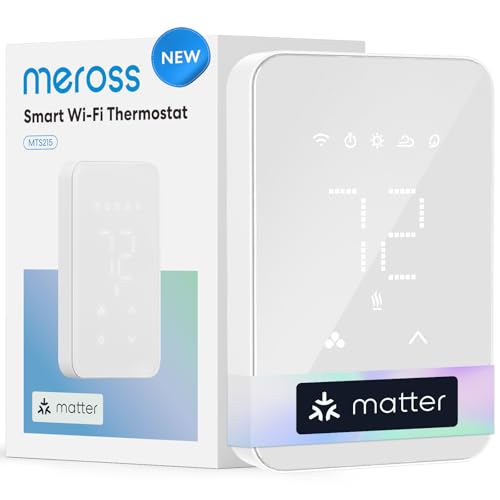
The meross Matter Smart Thermostat brings modern convenience to electric baseboard heating.
Designed for high‑line voltage (120‑240 VAC) systems, it replaces bulky wall units with a sleek, Wi‑Fi‑enabled controller that talks to every major smart‑home platform at once—Alexa, Apple Home, Google Home, SmartThings, and more—thanks to universal Matter compatibility.
Set schedules from the Meross app or with a simple voice command, and let the thermostat automatically pause when an open window is detected, cutting wasteful heating.
Real‑time energy monitoring shows exactly how much electricity you’re using, while historical data helps you fine‑tune habits for lower bills and a greener footprint. Whether you’re home, asleep, or away, the thermostat keeps your space comfortable and efficient, all without locking you into a single ecosystem.
| Specification | Detail |
|---|---|
| Voltage Compatibility | 120 – 240 VAC (baseboard, convector, fan‑forced) |
| Matter Support | Yes (Alexa, HomeKit, Google, SmartThings) |
| Connectivity | Wi‑Fi (2.4 GHz) |
| Scheduling | 24/7 visual schedule, programmable |
| Energy Monitoring | Real‑time & historical usage data |
| Open‑Window Detection | Built‑in sensor, auto‑pause heating |
| App Control | Meross iOS/Android app |
| Voice Control | Alexa, Google Assistant, Siri |
| Dimensions (WxHxD) | 4.5 × 3.2 × 1.1 inches |
| Weight | 0.45 lb |
Best For – Homeowners with electric baseboard or convector heaters who want full‑ecosystem smart‑home control and energy savings.
Pros
- Matter‑wide compatibility eliminates ecosystem lock‑in.
- Open‑window detection automatically reduces wasted heat.
- Detailed energy monitoring helps lower utility costs.
Cons
- Not compatible with low‑voltage (24 V) HVAC systems.
- Requires a stable 2.4 GHz Wi‑Fi network for optimal performance.
2. Mysa Smart Thermostat for Electric Baseboard Heaters

Mysa’s Smart Thermostat transforms ordinary electric baseboard heating into a sleek, energy‑smart experience. Designed exclusively for high‑line voltage systems (120‑240 V), it delivers precise temperature control for up to 3,800 W at 240 V while fitting into a footprint that’s 40 % smaller than previous models.
The adaptive display automatically brightens or dims based on ambient light, and the “Sleep & Wake on Approach” feature lets you set your preferred brightness without touching a button.
Installation is straightforward—just connect the four‑wire bundle (including neutral) and you’re ready to program schedules, temperature & humidity alerts, and remote control through the free Mysa app in under a minute.
Seamlessly integrate with Apple HomeKit, Amazon Alexa, or Google Assistant to voice‑command comfort from anywhere, and enjoy the peace of mind that comes with real‑time energy insights.
| Spec | Detail |
|---|---|
| Voltage | 120 V – 240 V |
| Maximum Load | 1,900 W @ 120 V / 3,800 W @ 240 V |
| Wiring | 4‑wire (hot, neutral, load, ground) |
| Connectivity | Wi‑Fi (802.11b/g/n) |
| Smart Home | Apple HomeKit, Amazon Alexa, Google Assistant |
| Display | Adaptive Brightness, Sleep & Wake on Approach |
| App | Free iOS & Android, scheduling, alerts |
| Dimensions | 40 % smaller than prior model |
Best For
Homeowners with electric baseboard or fan‑forced heaters seeking easy, app‑controlled comfort and smart‑home integration.
Pros
- Full smart‑home compatibility – voice control via Alexa, Google, HomeKit.
- Adaptive display & reduced size – blends discreetly into any room.
- Quick setup & remote scheduling – configure in under a minute with the free app.
Cons
- Not compatible with low‑voltage or two‑wire systems – older baseboards may need rewiring.
- Requires neutral or second live wire – may limit installation in some legacy homes.
1. Mysa Smart Thermostat LITE
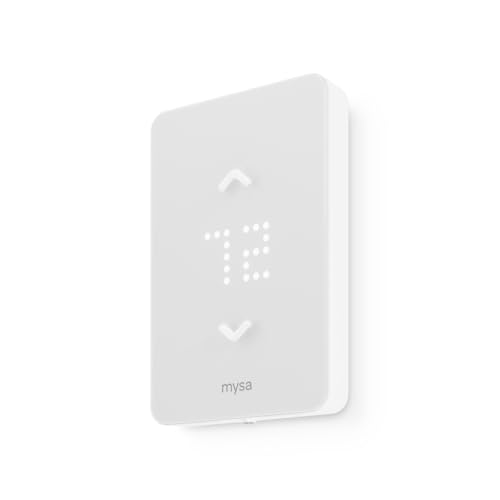
Mysa Smart Thermostat LITE is a Wi‑Fi‑connected line‑voltage thermostat built for 120 V‑240 V electric baseboard, fan‑forced, wall and convector heaters.
Its sleek, minimalist face hides a robust controller that talks to Apple HomeKit, Amazon Alexa and Google Assistant, letting you adjust temperature by voice or from anywhere with the free Mysa app—no subscription required.
Installation is a DIY‑friendly 4‑wire swap that takes about 15 minutes; the thermostat works with single‑pole configurations on 120 V, 208 V or 240 V circuits. Create daily schedules, set “away” modes and receive monthly runtime reports to cut heating bills up to 26 % while keeping every room comfortable.
Built to UL standards with a 2‑year warranty, Mysa is ideal for hard‑to‑heat spaces like garages, workshops, sunrooms or home additions. Real‑people support from North America ensures you’re never left in the cold.
| Specification | Detail |
|---|---|
| Voltage Compatibility | 120 V / 208 V / 240 V (single‑pole) |
| Power Type | Line‑voltage (electric baseboard, wall, convector) |
| Wi‑Fi | 2.4 GHz (802.11b/g/n) |
| Smart Home Integration | Apple HomeKit, Amazon Alexa, Google Assistant |
| App | Free iOS & Android (remote control, scheduling, reports) |
| Installation | 4‑wire DIY, replaces standard line‑voltage thermostat |
| Warranty | 2 years |
| Safety Certifications | UL listed |
| Dimensions | 4.5 × 2.5 × 1.5 in (approx.) |
| Operating Temperature | 0 – 120 °F (‑18 °C – 49 °C) |
Best For
Homeowners with electric baseboard heating who want smart, voice‑controlled temperature management without hiring an electrician.
Pros
- Universal voltage support (120 V‑240 V) for most electric heating systems.
- Free forever app with remote control, scheduling and monthly usage reports.
- Voice‑assistant compatible for hands‑free operation.
Cons
- Works only with single‑pole wiring; double‑pole setups require a separate relay.
- Requires a 2.4 GHz Wi‑Fi network; no 5 GHz support.
Buying Guide
Smart thermostats for electric baseboard heat must reliably handle high‑wattage loads while offering precise temperature control, energy‑saving features, and seamless integration with your home network. Look for models that combine robust hardware with intuitive software to maximize comfort and cut electricity costs.
Key Factors Buyers Should Consider
Compatibility with Electric Baseboard Systems
Choose a thermostat explicitly rated for electric baseboard heating, typically supporting 120 V or 240 V loads up to 2,000 W per zone. Verify that the unit can drive the required current without auxiliary relays, and confirm it works with single‑pole or double‑pole wiring configurations common in baseboard setups.
Ease of Installation and Wiring
A plug‑and‑play design with clear wiring diagrams reduces DIY errors and speeds up setup. Look for thermostats that include pre‑wired terminal blocks, screw‑less connectors, or optional mounting brackets. Compatibility with standard wall boxes and the ability to retrofit existing thermostats are also valuable.
Energy Monitoring and Scheduling Features
Advanced models provide real‑time power usage graphs, carbon‑footprint tracking, and geofencing to adjust heating when you’re away. Flexible scheduling—daily, weekly, and holiday presets—helps fine‑tune comfort while preventing waste, and many apps let you control settings from any smartphone or voice assistant.
Build Quality and Durability
A solid metal or high‑impact polymer housing resists heat and accidental bumps. Look for thermostats with sealed displays, water‑resistant ratings, and robust internal components that can endure continuous cycling typical of baseboard heat. Longevity reduces long‑term replacement costs.
Pricing, Value, and Smart Home Integration
Balance upfront cost against features like Alexa, Google Assistant, or Apple HomeKit support. Mid‑range models often deliver the best mix of reliability and connectivity, while premium units may add redundant sensors or advanced analytics. Ensure the thermostat’s subscription fees, if any, fit your budget.
Customer Reviews and Manufacturer Support
Read verified buyer feedback to gauge real‑world performance, especially regarding compatibility quirks and firmware updates. Strong warranty terms (typically 2–3 years) and responsive technical support can save headaches if you encounter wiring issues or need software assistance.
By weighing these factors—compatibility, installation ease, energy tools, durability, cost, and support—you’ll select a smart thermostat that reliably powers electric baseboard heating while delivering the convenience and savings modern homeowners expect.
Frequently Asked Questions
What features should I look for in a smart thermostat for electric baseboard heating?
Choose a thermostat that supports line‑voltage output or an external relay, offers precise temperature control, Wi‑Fi connectivity for app scheduling, geofencing, energy‑usage reports, and compatibility with your home’s voltage (120‑240 V) and wiring configuration and reliable performance support.
Can I install a smart thermostat on existing electric baseboard heaters without rewiring?
Yes, if your thermostat includes a line‑voltage relay or you add a compatible external relay module. Ensure the unit can handle 120‑240 V loads, follow manufacturer wiring diagrams, and, when unsure, consult a licensed electrician for safety compliance properly.
Which smart thermostat models work best with electric baseboard heat?
Top choices include the Ecobee SmartThermostat with a line‑voltage add‑on, the Honeywell Home T9 paired with a 120 V relay, the Stelpro Maestro, and the Mysa Smart Thermostat, all offering precise control, Wi‑Fi, and scheduling features for energy saving and remote monitoring capabilities.
How does a smart thermostat improve energy efficiency with electric baseboard heating?
It learns occupancy patterns, adjusts setpoints automatically, and allows remote temperature changes via smartphone. By preventing overheating and reducing idle runtime, it cuts electricity use, lowers bills, and extends heater lifespan, especially when combined with scheduling and geofencing features.
Conclusion
Choosing a smart thermostat for electric baseboard heating hinges on compatibility, ease of use, and the ability to fine‑tune comfort while cutting energy costs.
The ideal unit will integrate seamlessly with your existing wiring, offer reliable Wi‑Fi connectivity, and provide intuitive scheduling or learning features that adapt to your routine. Look for models that deliver clear temperature feedback, robust app support, and safety safeguards such as overload protection.
By prioritizing these qualities, you can enjoy consistent warmth, lower utility bills, and the convenience of controlling your home climate from anywhere—making the investment in a smart thermostat a smart, sustainable upgrade.

